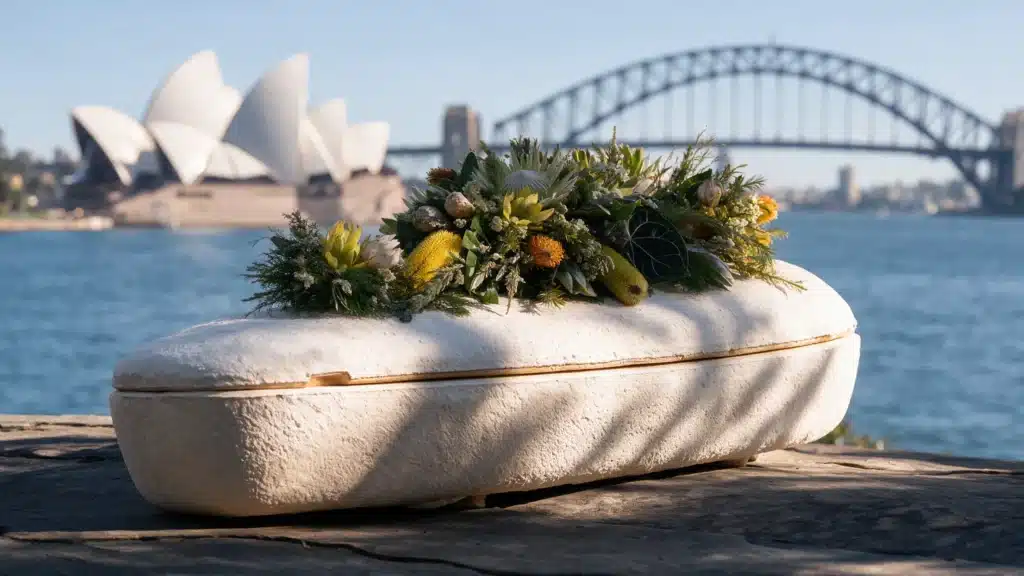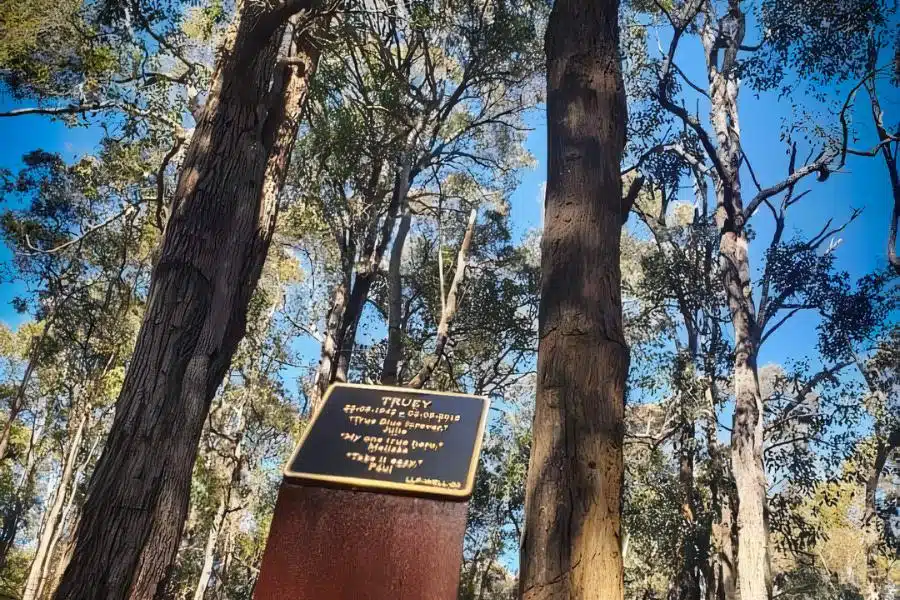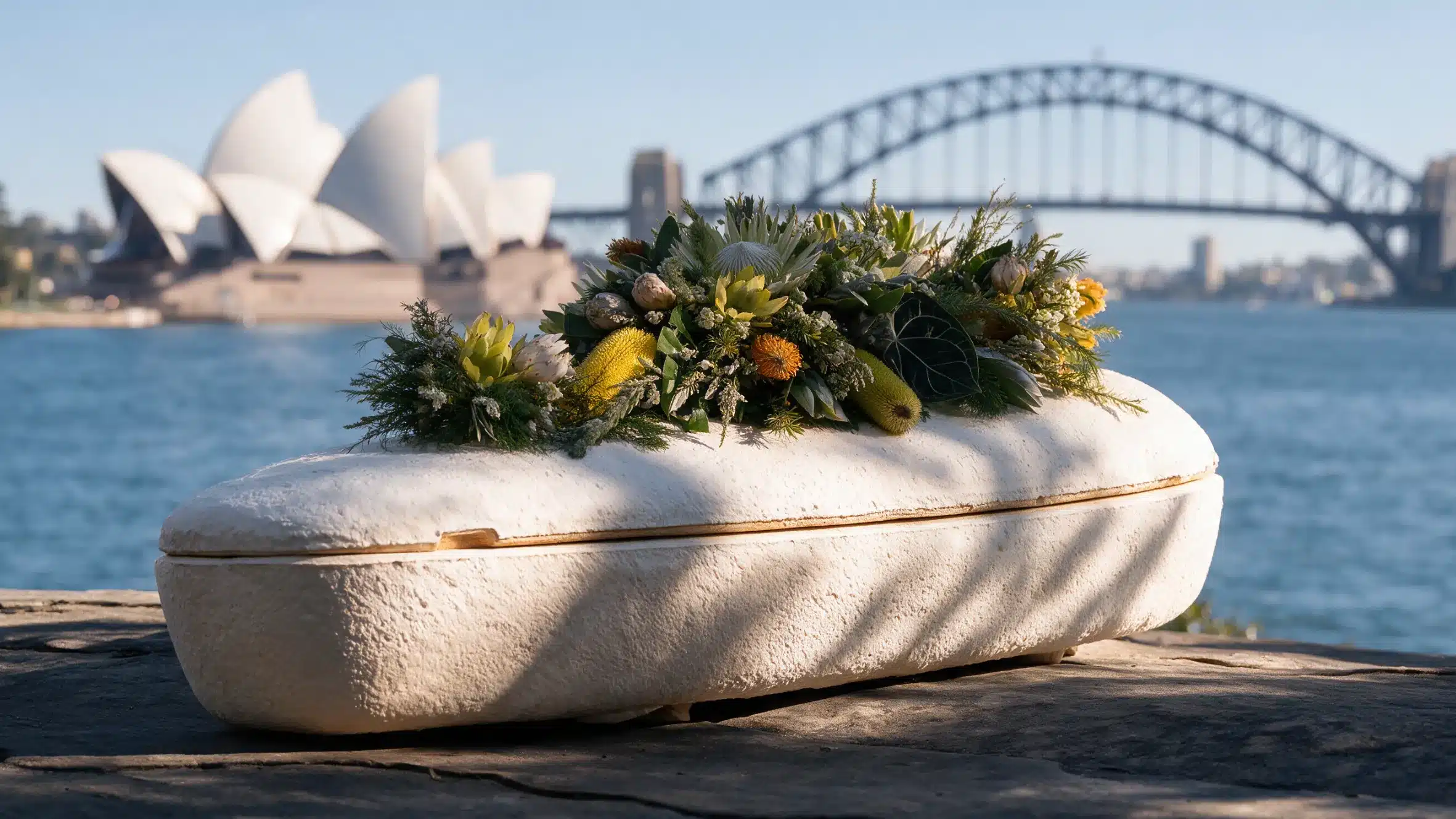
In September 2026, a woman in her 70s named Carolyn was laid to rest at Springwood Cemetery in the Blue Mountains in what has been reported as Australia’s first mushroom coffin burial. Her coffin was made from mycelium and hemp fibres by Dutch company Loop Biotech. Her family said the choice reflected her connection to nature.
The burial has raised questions about a type of coffin that is still relatively unfamiliar in Australia. What exactly is a mushroom coffin, and what should families consider before choosing one?
What Is a Mushroom Coffin?
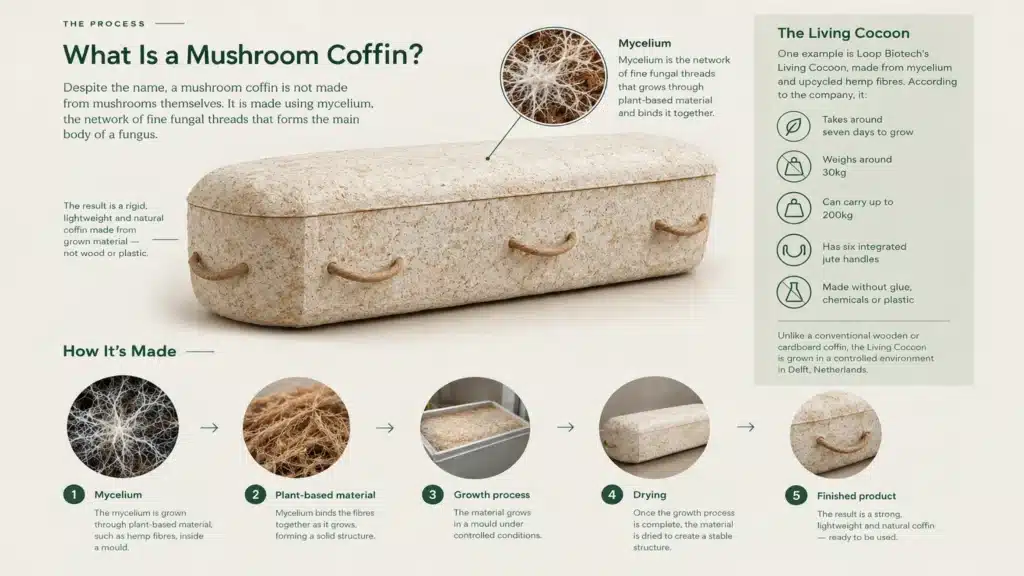
Despite the name, a mushroom coffin is not made from mushrooms themselves. It is made using mycelium, the network of fine fungal threads that forms the main body of a fungus.
The mycelium is grown through plant-based material, such as hemp fibres, inside a mould. As it grows, it binds the fibres together and forms a rigid structure. Once the growth process is complete, the material is dried to create a stable structure that can be used as a coffin.
One example is Loop Biotech’s Living Cocoon, made from mycelium and upcycled hemp fibres. According to the company, it:
- takes around seven days to grow
- weighs around 30kg
- can carry up to 200kg
- has six integrated jute handles
- is made without glue, chemicals or plastic
Unlike a conventional wooden or cardboard coffin, the Living Cocoon is grown in a controlled environment in Delft, Netherlands.
What Happens to a Mushroom Coffin After Burial?
Loop Biotech says the Living Cocoon can biodegrade within 45 days under ideal conditions. How quickly it breaks down depends on conditions such as moisture, oxygen, temperature and the surrounding burial environment.
That timeframe refers to the coffin itself, not the person inside it. Human decomposition follows its own process and depends on factors such as the burial environment, soil conditions, temperature, moisture and whether embalming has taken place.
Can Mushroom Coffins Be Used in Australia?
Whether a mushroom coffin can be used will depend on the cemetery and the rules that apply there. The burial of Carolyn at Springwood Cemetery in the Blue Mountains in September 2026 shows that this type of coffin can be used in NSW.
In NSW, for example, burial requirements generally require a body to be buried in a coffin with a securely sealed lid unless an exception or approval applies. Cemeteries & Crematoria NSW also includes mushroom-based burial products among its sustainable funeral options, alongside cardboard, willow, wicker and wool coffins and biodegradable shrouds.
For anyone considering a mushroom coffin, the practical details are worth checking with the funeral director and cemetery first:
- Availability: whether the coffin can be sourced and supplied when needed
- Size and weight: whether it is suitable for the burial site and handling requirements
- Transport: how it will be delivered and handled before burial
Cost is another practical consideration. Loop Biotech currently lists its Living Cocoon at €1,495 to €1,767 including VAT, depending on the product option. This is the manufacturer’s European price, so the amount paid in Australia may be different once shipping and any applicable import charges are included.
The coffin is only one part of the overall funeral cost. Funeral costs in Australia can also include cemetery or interment fees, funeral director services, transportation, burial arrangements and ceremony or memorial services.
The Environmental Trade-Off
A mushroom coffin uses bio-based materials, but its environmental impact needs to be considered across its full life cycle, from production to burial.
What it is made from
The Living Cocoon is made from mycelium and upcycled hemp fibres. Loop Biotech says it is made without glue, chemicals or plastic.
How it is produced
Mycelium-based materials need to be grown, processed and dried before they become a finished product. Those stages require energy.
Research into mycelium-based materials has found that electricity used during production can make a significant contribution to their environmental footprint. The research looked at mycelium-based composite materials rather than the Living Cocoon itself, so it should not be treated as a direct environmental assessment of mushroom coffins.
Getting it to Australia
The Living Cocoon used in Australia is produced in the Netherlands, so it needs to be transported a significant distance before reaching an Australian cemetery.
The environmental impact of human ashes is another consideration when comparing different funeral choices, particularly for families deciding between burial and cremation.
Other Alternatives to Conventional Coffins
A mushroom coffin is one of several alternatives to a conventional funeral. Depending on their preferences and local cemetery requirements, families may also consider:
- cardboard coffins
- willow, wicker or wool coffins
- biodegradable shrouds
- natural burial
- cremation followed by a memorial or another form of ash placement
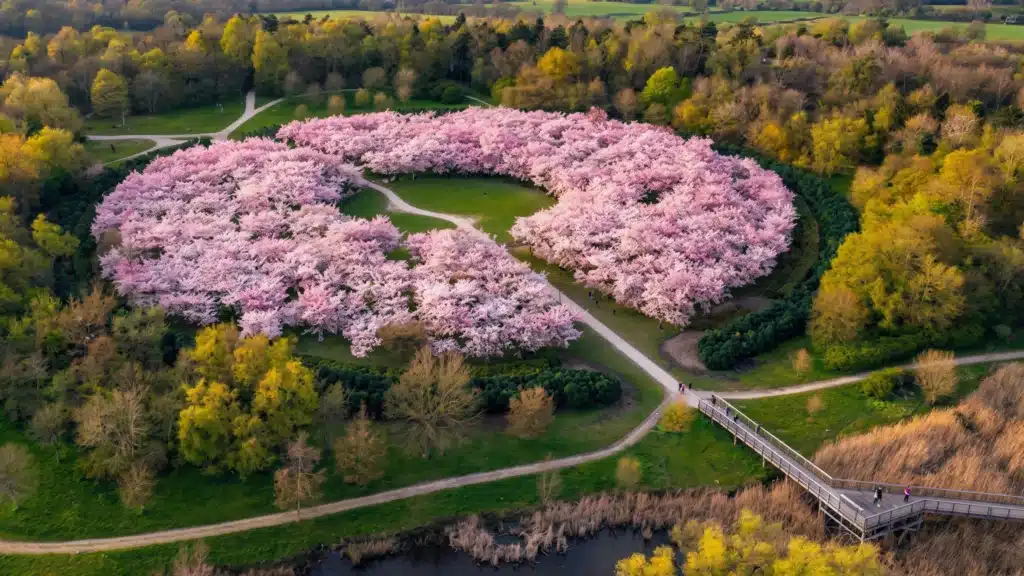
Cremation offers a different way to think about what happens to someone’s remains after death. Rather than being buried in a coffin, ashes can be placed in a memorial, returned to nature or become part of a living memorial.
At Living Legacy Australia, cremated ashes are prepared through a specialised treatment process before being incorporated into the planting of a memorial tree. The tree is then cared for as a permanent living place of remembrance.
This is different from a mushroom coffin, but both reflect a broader shift towards funeral and memorial choices that consider what happens to our remains after death, rather than simply where they are placed.